
Annual Consumer Duty Board Report
Guidance for Introducers
All FCA-authorised firms need a Consumer Duty annual report signed off by the business.
There is no template, format, or method of producing the report given by the regulator. You must make sure your report is proportionate for the size of your firm but detailed enough to explain to the FCA (if they ask for a copy) how you monitor and identify that you are meeting the requirements of the duty. This guidance provides examples of the type of data you could use if you have it.
Remember:
- Signed off report.
- Needs to be done annually, but the first report can be for a period of your choosing.
- All areas across your business should get involved with the report and provide data.
The report should:
- Be clear with no jargon. Include what you have done, what you have found and any gaps you need to fill.
- Include the poor results as well as the good.
- Back up what you say with the data you have.
Key things to remember
- You don’t need to send a copy to the FCA, but they may request it.
- The report should be evidence-based, reviewed, and signed off by the most senior people in your business.
- The format should be simple and clear, without the use of jargon, and easy for other parties (e.g., the FCA) to understand without them delving deeper and asking questions about the firm’s structure and operational model.
- You must explain how you decided on your approach; did you ask an independent third party to review elements such as communications? Did you test your existing communications with consumers?
- State whether there are any planned changes within the firm’s business strategy, e.g. business expansion, which have the potential to affect customer outcomes.
- Include in the report management information (MI) that you regularly use within your business.
- Make sure the data you use shows how you identify and monitor Consumer Duty.
- Focus on the four Consumer Duty Outcomes, as well as Principle 12.
Four Consumer Duty Outcomes and Principle 12
The Financial Conduct Authority (FCA) outlines four key Consumer Duty Outcomes to ensure financial firms treat customers fairly and deliver good outcomes. These outcomes aim to foster trust and protect consumers in the financial market.
1. Products and Services
2. Price and Value
3. Consumer Understanding
4. Consumer Support
- Acting in Good Faith: Firms must always act in an honest, fair, and open manner with their customers.
- Avoiding Foreseeable Harm: Firms should take proactive steps to prevent practices or products that could cause harm to customers
- Enabling Good Outcomes: Firms must ensure that their actions, products, and services help customers achieve positive financial outcomes
When starting your report, ask yourself the FCA’s 10 key questions on Consumer Duty:
1.
2.
3.
4.
5.
6.
7.
8.
9.
10.
An example of report contents structure
- Executive Summary
- Consumer Duty Champion statement - do they think the business has met the requirements?
- Scope and approach taken to implement and embed the Consumer Duty.
- Cross-cutting rules – high level, how do you meet the three cross-cutting rules of Principle 12?
- Act in good faith towards retail customers
- Avoid foreseeable harm to retail customers
- Enable and support retail customers to pursue their financial objective
- Outcomes monitoring MI – evidencing how you have monitored customer outcomes and adherence to the duty via management information.
- Business strategy - What is your strategy, and is it aligned with delivering good outcomes under the Duty? Do you have any business changes planned?
- Culture and Purpose - How your firm’s culture and purpose align with the Duty. What does your website say about your business? How do you promote yourselves to your customers?
- Future commitments - How you intend to act on areas for improvement and implement any new initiatives for further adherence to the Duty.
- Board approval – It is very important to document this and show how they challenged the report.
Questions to ask yourself in your Executive Summary and for your board approval
1.
How does your firm demonstrate compliance with principle 12?
2.
3.
4.
5.
6.
Example structure for an Executive Summary
- This report shows our commitment to treating customers fairly and delivering great service.
- We’ve improved our vehicle offerings, pricing, and customer service this year.
- Customer feedback has been positive, showing better satisfaction.
Products and Services:
- We offer vehicles and finance packages that match what our customers need.
- We’ve added new models and improved financing options.
Price and Value:
- Our pricing is fair and competitive.
- Customers get good value for their money.
Consumer Understanding:
- We make sure all information about our cars and deals is clear and easy to understand.
- We help customers make informed choices.
Consumer Support:
- Our customer service is friendly and helpful.
- We resolve issues quickly and efficiently.
- We always act honestly and fairly.
- We work to prevent any problems for our customers.
- Our goal is to ensure every customer leaves happy with their purchase.
- We faced some challenges this year but are working on improvements.
- Next year, we’ll focus on bettering our services and customer support.
- We’re committed to continuously improving our offerings, pricing, and customer service.
- We have plans for new initiatives to enhance the customer experience
- We’re dedicated to providing the best for our customers.
- We’ll keep working hard to improve and meet our customers’ needs.
Consumer Duty Board Champion
A Consumer Duty Board Champion is a senior individual within your business, typically a member of the board or leadership team, designated to lead and advocate for the firm’s adherence to Consumer Duty principles.
Their primary role is ensuring consumer interests are central to the firm’s culture, strategy, and operations.
Role of the Consumer Duty Champion
Leadership and Advocacy: Ensures we put customers first in everything we do.
Oversight and Accountability: Monitors our compliance with Consumer Duty principles.
Engagement and Communication: Promotes clear, honest communication with our customers.
Reporting and Feedback: Provides updates on our progress and identifies areas for improvement.
Future Focus: Plans for continuous improvements in customer service and satisfaction.
Example Consumer Duty Board Champion Statement
Consumer Duty Champion Report
Introduction: As the Consumer Duty Champion, I ensure we always prioritise our customers’ needs and provide excellent service.
Leadership and Strategic Influence: This year, I’ve worked with our team to ensure our products and services meet our customers’ needs. We’ve reviewed our inventory, financing options, and sales practices to deliver better value.
Oversight and Accountability: I’ve tracked our progress following Consumer Duty principles. We’ve conducted regular reviews to ensure we’re treating customers fairly and meeting their expectations.
Engagement and Communication: We’ve trained our staff to communicate clearly and honestly with customers. We’ve also listened to customer feedback to improve our services.
Reporting and Feedback: This report highlights our achievements, such as better customer satisfaction and new financing options. We’ve included examples of how we’ve helped customers find the right vehicle at the right price.
Future Focus: Looking ahead, I will focus on improving our customer service and ensuring we continue to offer great value. We’re committed to making ongoing improvements to serve our customers better.
Conclusion: We’re dedicated to putting our customers first and providing excellent service. We’ll keep working hard to meet our customers’ needs and exceed their expectations.
Scope and approach taken to implement and embed the Duty – questions to answer in your report:
Principle 12 – how can you evidence compliance with the three cross-cutting rules?
Practices:
- Transparent Communication: Ensure all advertising, contracts, and customer interactions are clear, honest, and transparent.
- Training Staff: Regularly train employees on ethical sales practices and customer service.
- Customer Feedback: Actively seek and act on customer feedback to improve service and address issues.
Evidence:
- Documentation of Training Programs: Records of training sessions, attendance, and materials used.
- Customer Feedback Records: Logs of customer feedback, surveys, and actions taken in response.
- Transparent Contracts: Copies of clear and easy-to-understand contracts and sales agreements.
Practices:
- Thorough Inspections: Conduct comprehensive inspections and maintenance checks on all vehicles before sale.
- Disclosure of Vehicle History: Provide complete and accurate vehicle history reports to customers.
- Fair Sales Practices: Avoid high-pressure sales tactics and ensure customers are given the time and information needed to make informed decisions.
Evidence:
- Inspection Records: Detailed records of vehicle inspections and any maintenance performed.
- Vehicle History Reports: Copies of vehicle history reports provided to customers.
- Sales Process Documentation: Documentation of the sales process, showing how information is provided to customers and their decision-making process is supported.
Practices:
- Personalised Recommendations: Offer cars and financing options that suit the individual needs and circumstances of customers.
- After-Sales Support: Provide robust after-sales support, including warranties, service plans, and a clear process for addressing complaints.
- Continuous Improvement: Regularly review and update practices based on customer feedback and market trends.
Evidence:
- Customer Profiles: Records of customer needs assessments and how recommendations were tailored to meet those needs.
- After-Sales Support Logs: Documentation of aftersales support provided, including service records and customer follow-up.
- Improvement Logs: Records of changes made to practices based on customer feedback and internal reviews.
Outcomes monitoring and management information (MI) – tips for sharing and interpreting your data
You can access the Dealer Review Report via the Reports section in DealerZone. This provides some useful MI relating to finance products.
Example of supporting data
A good place to start is the list published by the FCA of the types of data firms should include in their report.
What each of these means and what is available will be different for every firm but use this list to guide what you include.
Number of complaints
The Financial Lives survey, for example, contains granular data about the financial lives of different groups.
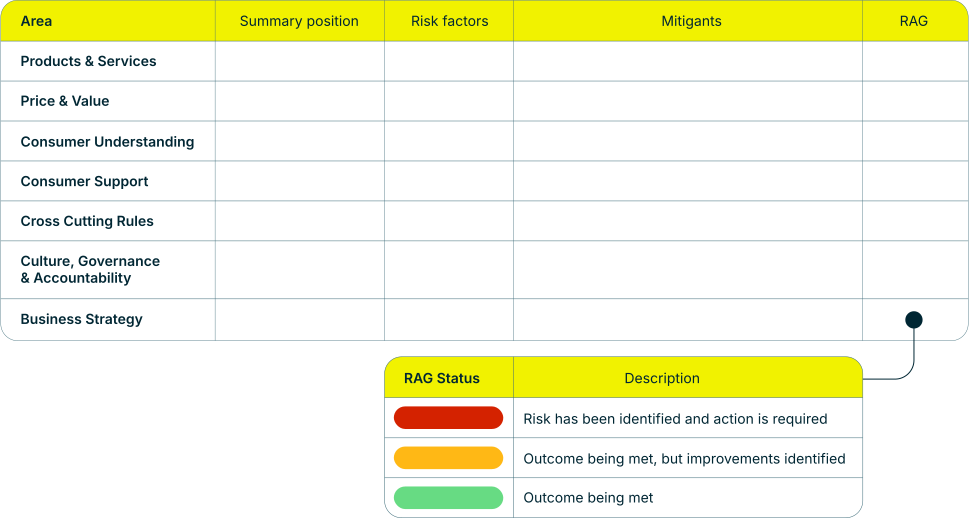
This is an example of how you can show each piece of data in your report, explaining what information you are including, what the results tell you, any issues or actions that have been completed and any gaps (that you might want to work on for next year). You can support this summary with more detailed data, graphs, etc., that will help explain your results.
Try and summarise all the data and outcomes in a simple way, as per this example.
You can also use a table format for all your data.
Business strategy, culture and purpose
Business strategy
What is your strategy, and is it aligned with delivering good outcomes under the Duty? Do you have any business changes planned?
- Include any sales or marketing strategies that you are currently following or intend to follow in the future.
- Have you made any enhancements to your customer service processes that have improved the overall customer experience?
Culture & Purpose
How does your firm’s culture and purpose align with the Duty?
- Internally, do you have any values or key mission statements that your staff work towards with the customer experience at its heart?
- Is your leadership team demonstrating its commitment to the Duty? Do they make decisions that prioritise customer outcomes?
- Do you have any training programmes or processes for staff to understand the importance of customer service excellence?
- What does your website say about your business? How do you promote yourselves to your customers?
- What do you have in place regarding customer feedback loops and opportunities for employees to voice concerns and make suggestions for improving customer outcomes?
Board approval
Key things to consider:
- Providing a high-level brief to the board before the report presentation will help to highlight the key points and ensure everyone is aligned with the outcome of the report.
- Keep the presentation as concise as possible to accompany the report, with the key findings and recommendations highlighted
- Note any questions or challenges to the report so that they can be documented and improve the overarching report before approval.